Willison Highlights Classic Roger Rabbit Physics Trick
A classic special effects technique from the 1988 film Who Framed Roger Rabbit highlights the enduring value of physical ingenuity in an era increasingly dominated by digital automation.
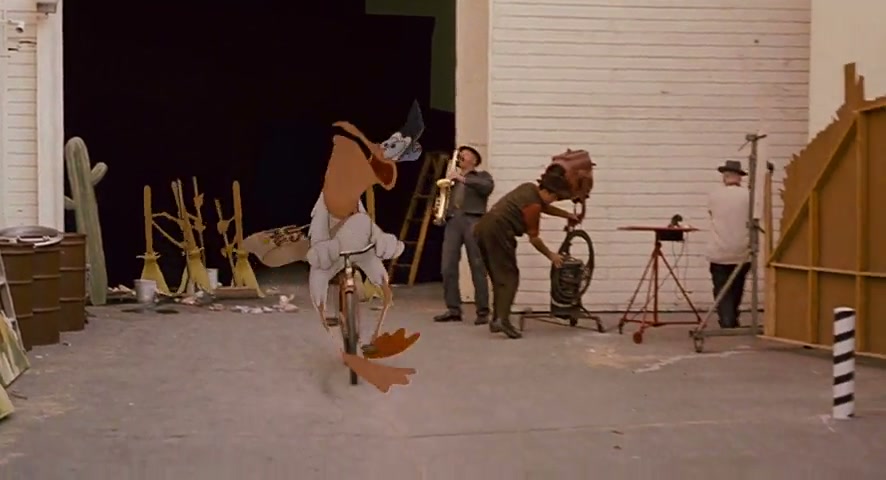
Blogger Simon Willison recently highlighted a fascinating behind-the-scenes detail from director Robert Zemeckis's 1988 cinematic classic "Who Framed Roger Rabbit," which was originally pointed out by researcher Cypress Frankenfeld. The specific sequence, occurring early in the film, features an animated pelican riding a real, physical bicycle. It showcases a seamless blend of physical effects and traditional hand-drawn animation that remains impressive decades later.
To achieve the illusion of an invisible rider operating the bicycle, the production crew filled the bicycle's wheels with water to lower its center of gravity and add crucial stability. They then set the bicycle in motion and guided its path remotely using a concealed cable system. This physical setup allowed the animators to later overlay the cartoon pelican onto a real-world prop that reacted realistically to the environment's actual physics, rather than trying to simulate those complex physical forces entirely by hand.
For modern digital artists, visual effects specialists, and AI video practitioners, this clever integration of physical props serves as a masterclass in hybrid filmmaking. While modern generative AI tools and computer-generated imagery attempt to simulate physics from scratch, physical constraints often produce the most convincing interactions. Relying on real-world mechanics, such as weighted wheels and physical cables, provides a tangible anchor that purely digital or AI-generated elements can reference to maintain visual consistency and believability.
Ultimately, the creative spirit of Zemeckis's production team serves as an enduring reminder that the best visual effects often rely on simple, physical problem-solving rather than complex computational rendering or digital automation. As creators navigate new frontiers in generative video and automated animation, blending physical reality with synthetic elements remains a foundational technique for high-quality storytelling.
This is our own summary of reporting by Simon Willison